
Artificial intelligence (AI) has gradually become integrated into daily mobile operations in a quiet way. Be it your mobile facial recognition unlocking, personalized product suggestions, or voice search features, you have already been utilizing AI to enhance the interaction experience.
Unlike other software applications with specific instructions, AI-driven mobile apps have the ability to learn from the user’s activity, detect patterns and evolve. This capability makes it possible for the app to provide you with a personalized experience without any setting changes made on your part.
As businesses continue investing in intelligent technologies, the Artificial Intelligence Market (Mercado de Inteligencia Artificial) is expanding rapidly. This growth reflects the increasing demand for smarter applications that improve convenience, efficiency, and customer engagement across industries.
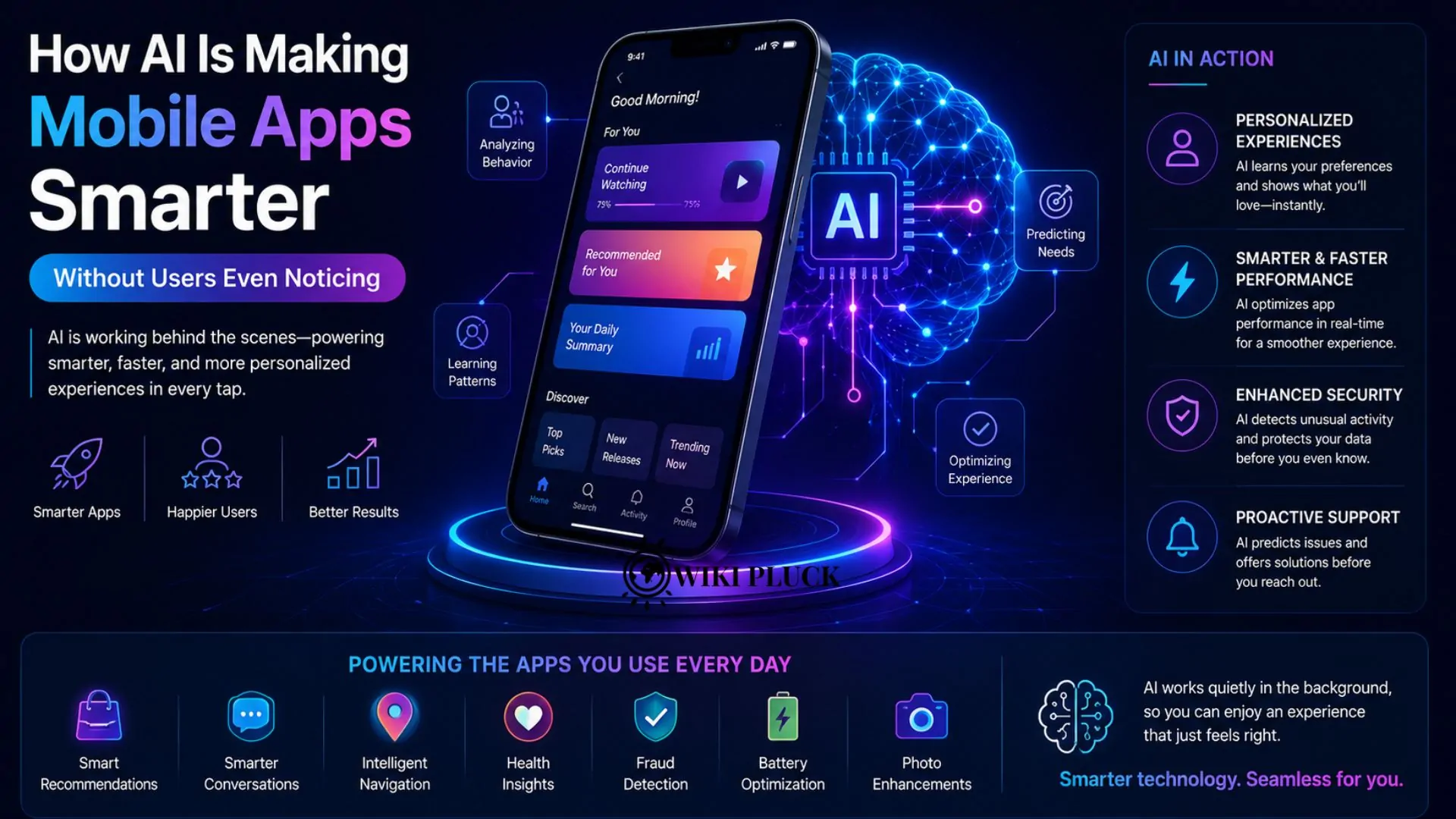
How AI Makes Mobile Apps Smarter
AI improves mobile applications by processing big data in real time, which leads to smarter decision making for better user experience. The application does not have the same UI for all users; rather, each user interface varies according to preferences and behavior of the user.
For instance, streaming applications will recommend movies depending on past viewings; shopping applications recommend products depending on what has been purchased before, and GPS applications plan the fastest route by processing current traffic information. In this way, the intelligent application saves the user time.
The other significant advantage is the automation process of many activities such as organization of photos, spam messages filtration, and scheduling.
Also Read : AI-Powered Predictive Analytics: Transforming User Retention and Monetization in Mobile Apps
Personalized Experiences Without Extra Effort
Personalization is a reason why Artificial Intelligence is now a must have in mobile apps today.
When you use an app it learns something about you every time. Artificial Intelligence takes this information. Use it to figure out what you like and do not like. Then it shows you things that’re more interesting to you.
By showing you the same things everyone else sees, apps that use Artificial Intelligence learn what you enjoy and get better at suggesting things to you over time. Artificial Intelligence helps apps do this by remembering what you like about Artificial Intelligence.
This technology benefits a wide range of industries, including:
- E-commerce platforms recommending products based on browsing history.
- Music and video streaming apps creating personalized playlists.
- Food delivery apps suggesting favorite restaurants and meals.
- News applications displaying stories based on reading interests.
These personalized experiences improve user satisfaction while increasing engagement and retention.
AI Strengthens Mobile App Security
The other field in which AI has left its mark is that of security. With the rise in sophistication of cyber attacks, mobile applications require AI to be able to recognize the malicious attempts and block the access.
Such biometric verification processes as facial recognition and fingerprint scanning use AI to authenticate the user. Furthermore, AI watches the user login and transaction patterns to notice any abnormalities.
Since AI systems learn from every new piece of information, they are capable of dealing with the security threats better than the rule-based systems.
Smarter Search and Voice Assistance
I think mobile apps are really good at finding things because of Artificial Intelligence.
Artificial Intelligence does a lot more than just look for the words you type. It tries to understand what you really mean. What you want to do. So even if you spell something or use everyday language the app can usually figure out what you are looking for and show you relevant things.
Things like Siri and Google Assistant are also very helpful. You can just talk to them. They will do things for you. You can ask them to remind you of something, find your way, send a message to someone or control the devices in your home. Artificial Intelligence makes it easy to do things and it makes technology easy to use for everyone.
AI Improves Mobile Photography and Navigation
Many smartphone users benefit from AI without realizing it, especially when taking photos.
AI automatically adjusts camera settings such as focus, lighting, exposure, and image stabilization. It can also recognize different scenes and optimize settings accordingly, helping users capture high-quality photos with minimal effort.
Navigation applications also require AI to study the current traffic situation, road blocks, weather conditions, and travel history. In this way, they can suggest an optimal route for traveling and calculate time accordingly.
The above-mentioned benefits make traveling much easier and prevent unnecessary delays.
Also Read : AI in Mobile App Development: Trends and Predictions for 2025
The Future of AI in Mobile Applications
Artificial intelligence continues to evolve, and its role in mobile apps is expected to grow significantly over the coming years.
The future of Artificial Intelligence is going to be really cool. Artificial Intelligence applications will be able to do a lot of things for us like help us out when we need it and make things easier to use.
Artificial Intelligence will also make healthcare and education better. Artificial Intelligence will even help with money and customer support. This will make our digital experiences better and more about what we want.
A lot of companies are starting to use Artificial Intelligence to make exciting things for our phones. This is because the Artificial Intelligence Market is getting bigger and bigger. Companies, from all kinds of industries are using Artificial Intelligence to make things work better and to make our lives easier.
Key Takeaways
- Artificial intelligence is making mobile apps more personalized and efficient.
- AI improves user experiences through recommendations, automation, and predictive features.
- Mobile app security is becoming stronger with AI-powered fraud detection and biometric authentication.
- Voice assistants, smart search, and intelligent navigation are driven by AI technologies.
- Businesses are increasingly investing in AI to create more adaptive and user-friendly mobile applications.
- The growing Artificial Intelligence Market reflects the rising demand for AI-powered digital solutions.
Conclusion
Artificial intelligence has transformed mobile applications from simple digital tools into intelligent platforms that understand user behavior and adapt to changing needs.
While many AI-powered features operate quietly in the background, they play a crucial role in improving convenience, security, and overall user satisfaction.
As technology continues to advance, AI will become even more deeply integrated into everyday mobile experiences. From personalized recommendations and smarter virtual assistants to enhanced security and predictive automation, AI is shaping the future of mobile applications in ways that benefit both users and businesses.
Organizations that embrace these innovations will be better positioned to meet evolving customer expectations in an increasingly digital world.
Frequently Asked Questions (FAQs)
How does AI improve mobile apps?
AI improves mobile apps by offering personalized recommendations, automating repetitive tasks, enhancing security, improving search accuracy, and providing smarter user experiences based on individual behavior.
Are AI-powered mobile apps safe to use?
Most AI-powered apps use advanced security measures such as biometric authentication, fraud detection, and encrypted data processing. However, users should always download apps from trusted sources and review privacy settings.
Which industries benefit the most from AI-powered mobile applications?
AI is widely used in healthcare, e-commerce, banking, education, entertainment, transportation, and customer service, where it helps improve efficiency and user engagement.
Does AI collect personal information from users?
AI systems may process user data to provide personalized experiences. Reputable app developers follow privacy regulations and implement security measures to protect user information.
What is the future of AI in mobile applications?
The future includes more intelligent automation, predictive features, advanced voice assistants, improved accessibility, stronger security, and highly personalized mobile experiences powered by artificial intelligence.

As the driving force behind WikiPluck, I am dedicated to curating and sharing insightful knowledge across a spectrum of subjects. From technology trends to Business advice, WikiPluck strives to be a go-to resource for those seeking to enhance their understanding and make informed decisions.
Join me on this journey of discovery and enlightenment as we pluck the gems of wisdom from the vast landscape of knowledge.